
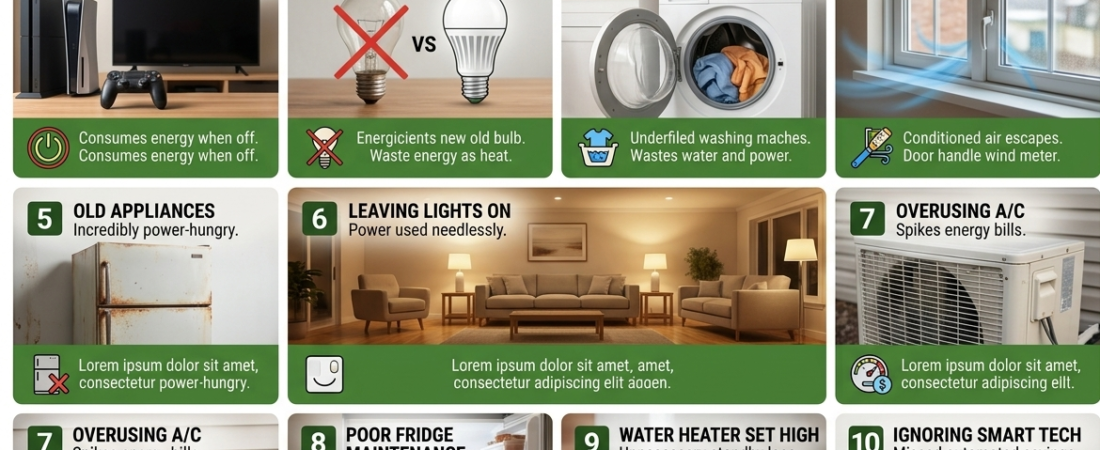
Wasting energy at home is more common than many people realize. With energy costs continuing to rise, many homeowners are wasting energy at home without realizing it, leading to higher electricity bills and unnecessary energy consumption.
By identifying and fixing these common sources of energy waste, you can lower your utility bills while creating a more sustainable and energy-efficient home.
Let’s explore ten things in your home that could be wasting energy and costing you money.
1. Wasting Energy at Home by Leaving Electronics Plugged In
Many electronic devices continue to consume electricity even when turned off. This is often called “phantom” or “standby” power.
Common culprits include:
- Televisions
- Gaming consoles
- Phone chargers
- Computers
- Coffee makers
Unplugging devices when not in use or using smart power strips can instantly reduce unnecessary energy consumption. According to the U.S. Department of Energy, LED bulbs use significantly less energy and last much longer than traditional incandescent bulbs.
Learn more: https://www.energy.gov/energysaver/led-lighting
2. Wasting Energy at Home With Traditional Incandescent Bulbs
Older incandescent bulbs use significantly more electricity than modern LED alternatives. One of the most common ways of wasting energy at home is continuing to use outdated incandescent bulbs instead of energy-efficient LED lighting.
Benefits of Switching to LED Bulbs
- Lower energy consumption
- Longer lifespan
- Reduced replacement costs
- Better lighting efficiency
This simple upgrade can make a noticeable difference in your energy bill.
3. Running Half-Full Washing Machines
Doing multiple small loads of laundry uses drastically more water and electricity than running a full load.
To improve efficiency:
- Wash full loads whenever possible
- Use cold water settings (around 75% to 90% of a washing machine’s energy goes into heating the water)
- Choose energy-efficient wash cycles
These small changes can save both energy and money over time.
4. Poorly Sealed Doors and Windows
Tiny gaps around doors and windows allow cool or warm air to escape, forcing your heating and cooling systems to work harder.
Signs of Air Leaks
- Drafts near windows
- Uneven room temperatures
- Higher energy bills
Applying weather stripping and sealing gaps can improve energy efficiency significantly.
5. Old or Inefficient Appliances
Older appliances often consume much more energy than newer energy-efficient models.
Common examples include:
- Refrigerators
- Air conditioners
- Washing machines
- Water heaters
Upgrading outdated appliances can lead to long-term savings and improved performance.
6. Leaving Lights On Unnecessarily
Many households waste electricity simply by leaving lights on in empty rooms.
Helpful habits include:
- Turning off lights when leaving a room
- Using motion-sensor lighting
- Switching to smart lighting systems that you can control from your phone
Small changes can produce noticeable savings throughout the year.
8. Overusing Air Conditioning
Air conditioning systems are among the largest energy consumers in many homes. Many families are wasting energy at home by setting air conditioners lower than necessary or neglecting regular maintenance.
Ways to Reduce Energy Use
- Set reasonable temperatures (avoid dropping it lower than necessary)
- Clean air filters or replace air filters regularly so the system doesn’t strain
- Use fans to improve airflow
- Keep doors and windows closed while cooling
Efficient use of your air conditioner can help lower utility costs. The ENERGY STAR program recommends regular maintenance and efficient appliance usage to reduce household energy consumption.
Learn more: https://www.energystar.gov
8. Poor Refrigerator Maintenance
A refrigerator runs continuously, making efficiency especially important.
Refrigerator Maintenance Tips
- Keep door seals clean
- Avoid overfilling
- Allow proper airflow around the unit
- Set the correct temperature
Regular maintenance helps improve performance and reduce energy waste.
9. Water Heaters Set Too High
Many water heaters are set at higher temperatures than necessary.
Lowering the temperature slightly can:
- Reduce energy consumption
- Lower utility bills
- Extend the lifespan of the unit
Always follow manufacturer recommendations when adjusting settings.
10. Ignoring Smart Home Technology
Modern smart home devices can help monitor and reduce energy usage. Smart devices can help identify areas where you may be wasting energy at home and provide better control over household electricity usage.
Useful options include:
- Smart plugs
- Smart thermostats
- Smart lighting systems
- Energy monitoring devices
These tools provide better control over household energy consumption and can help identify areas of waste.
Frequently Asked Questions
What Uses the Most Electricity in a Home?
Heating and cooling systems, water heaters, refrigerators, and major appliances are typically among the largest energy consumers in most homes.
Do Smart Home Devices Actually Save Energy?
Yes. Smart plugs, thermostats, and lighting systems can help reduce unnecessary energy usage by automating household routines and monitoring consumption.
Is Switching to LED Bulbs Worth It?
Absolutely. LED bulbs use less electricity, last longer, and can significantly reduce lighting costs over time.
Understanding where you are wasting energy at home is the first step toward lowering your utility bills and creating a more sustainable living environment.
Final Thoughts
Reducing energy waste does not always require expensive renovations. Often, small adjustments to daily habits and simple home upgrades can make a significant difference.
By identifying energy-wasting appliances, improving household efficiency, and adopting smarter habits, you can lower your utility bills while creating a more sustainable home. By avoiding the common mistakes discussed above, you can stop wasting energy at home and enjoy long-term savings.
If you’re interested in improving your home’s efficiency, be sure to check out our related articles:
- 7 Affordable Smart Home Upgrades That Make Daily Life Easier
- Embracing Sustainable Living: Tips for a Healthier Home
- 5 Powerful Smart Kitchen Technologies for Healthy Living
Small changes today can lead to significant savings tomorrow.